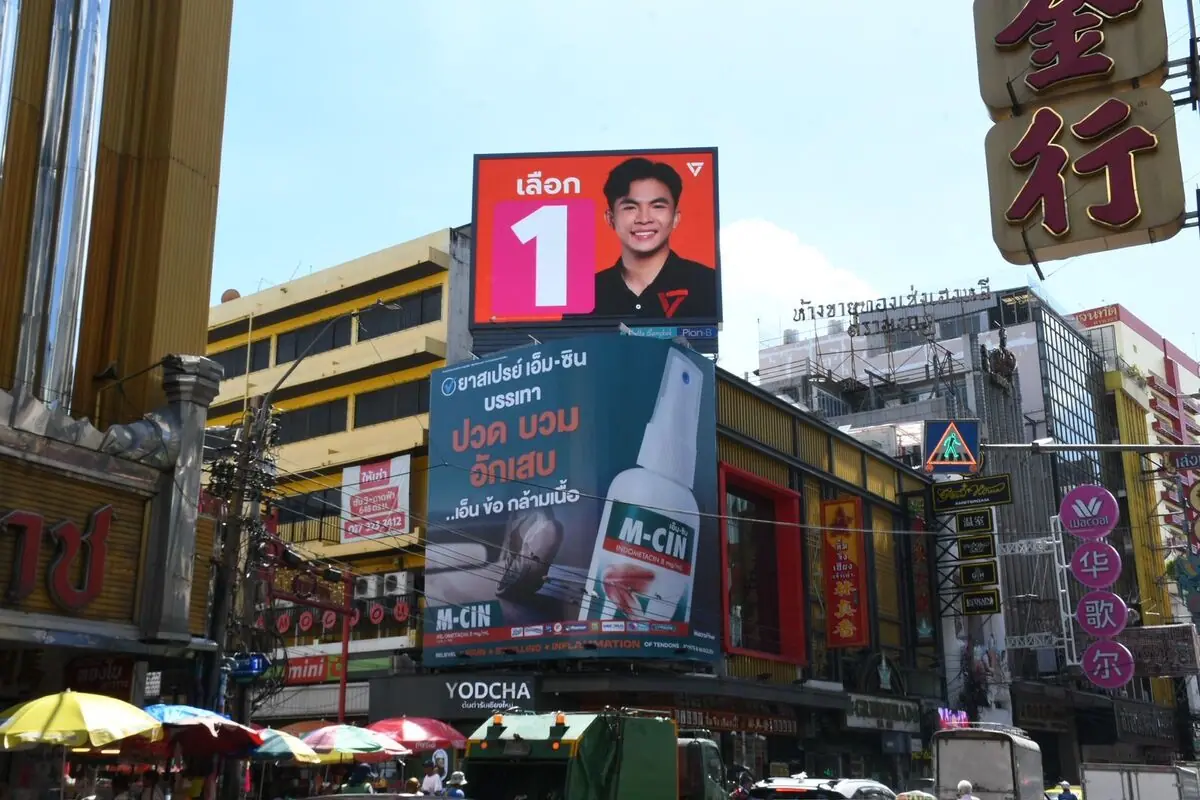
People’s Party · Samphanthawong
Samphanthawong campaign 2026
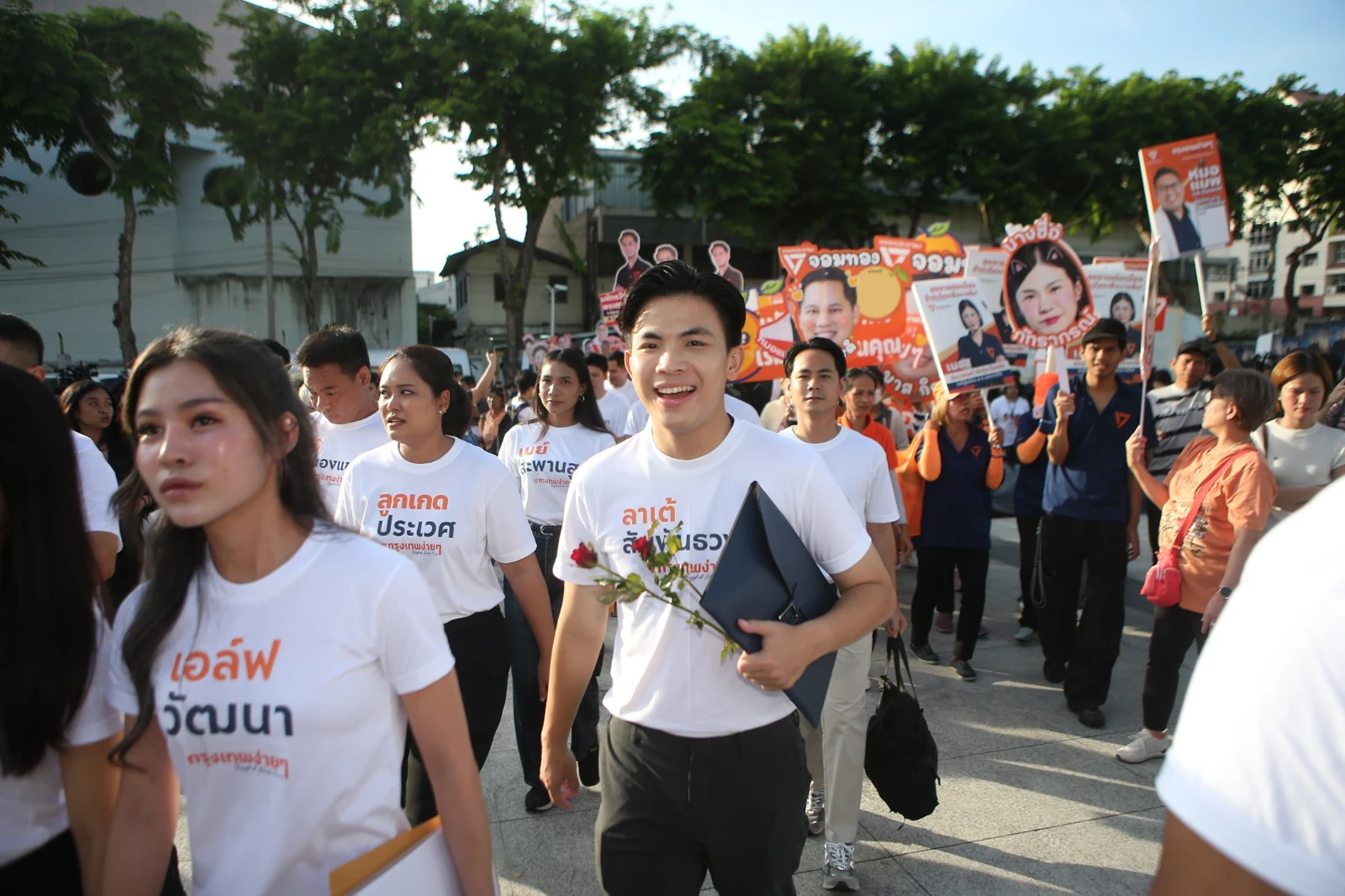
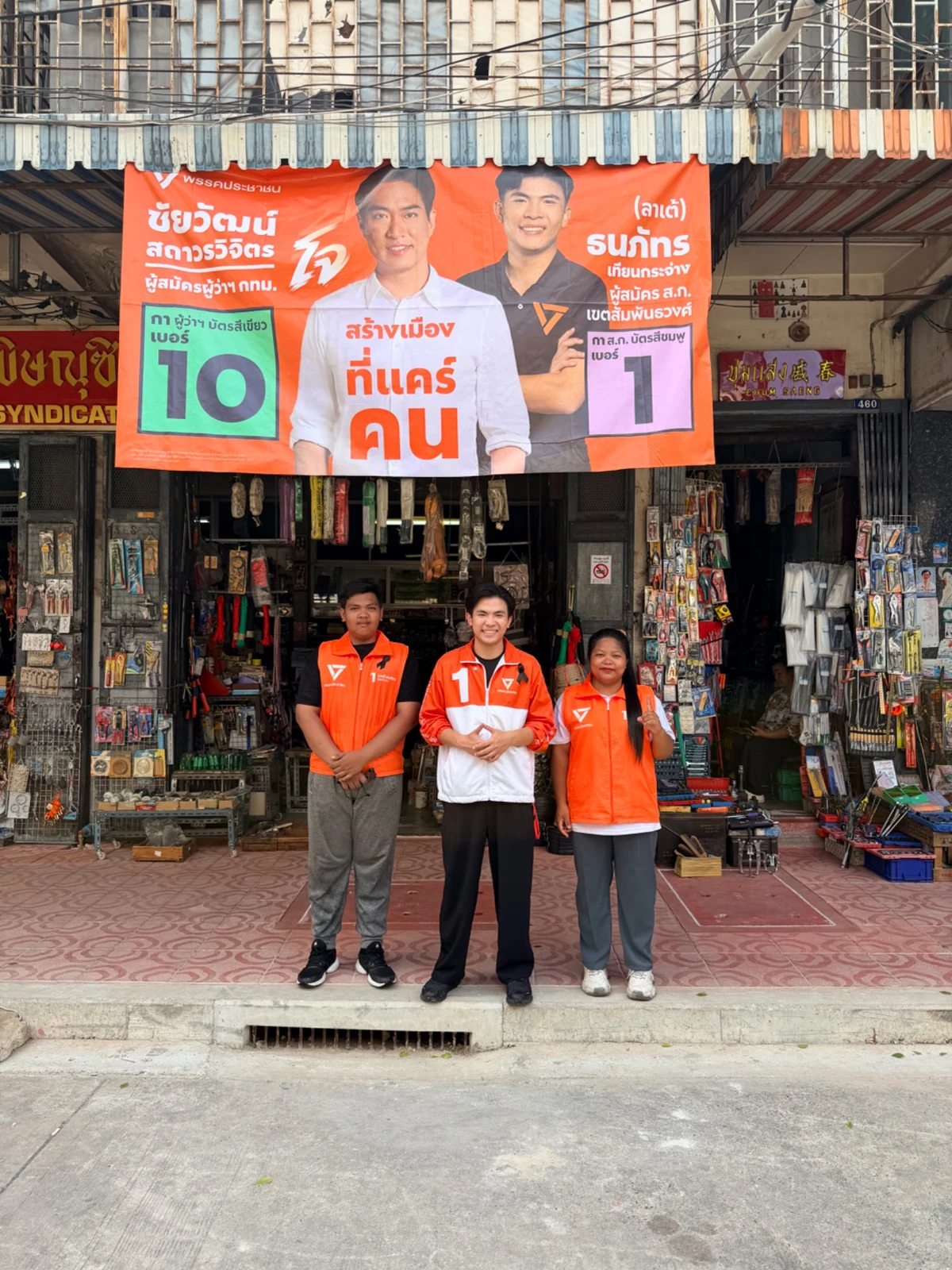
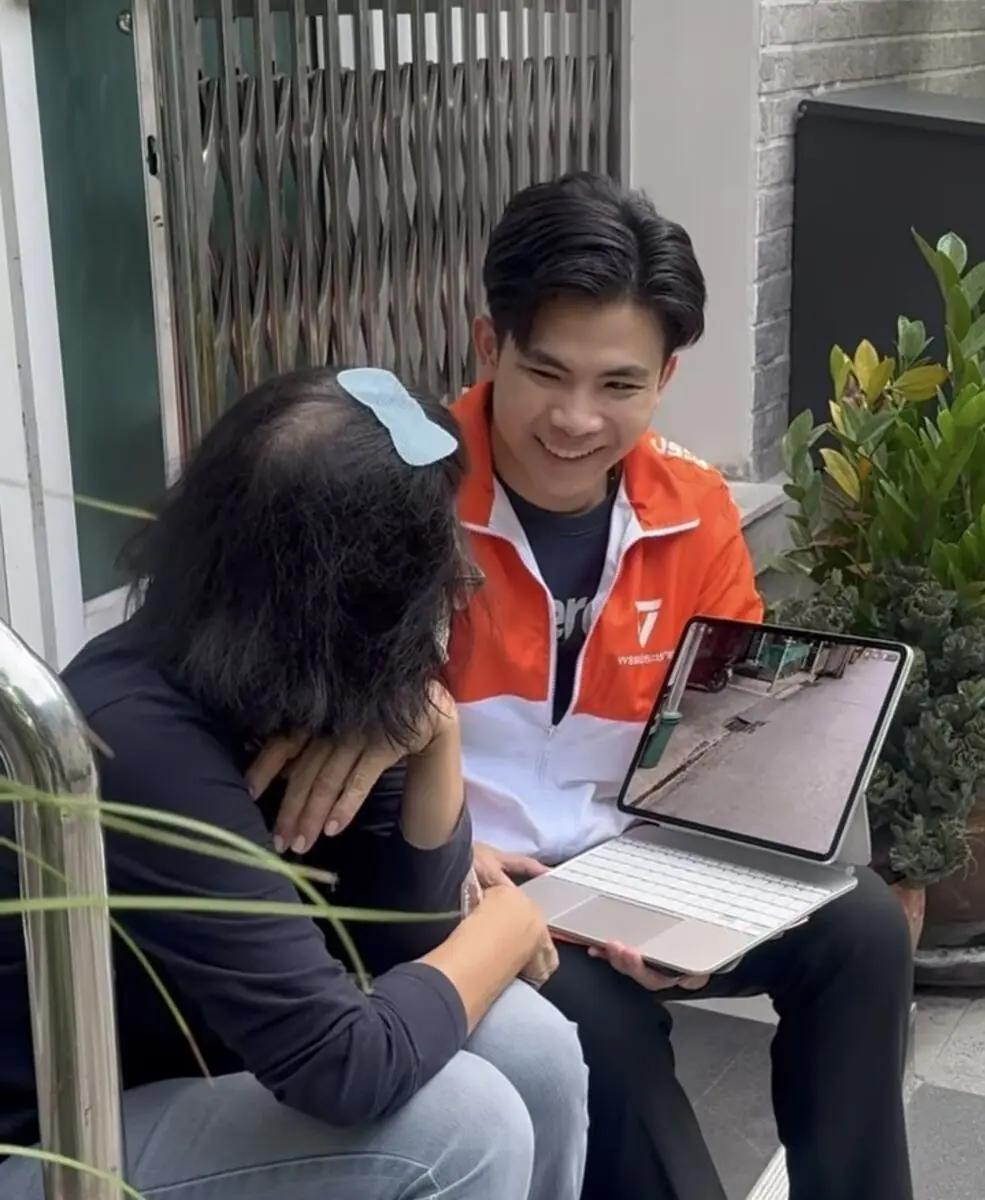
Listening to the neighbourhood, developing proposals and taking the campaign into Samphanthawong’s streets.
Image: Matichon Weekly
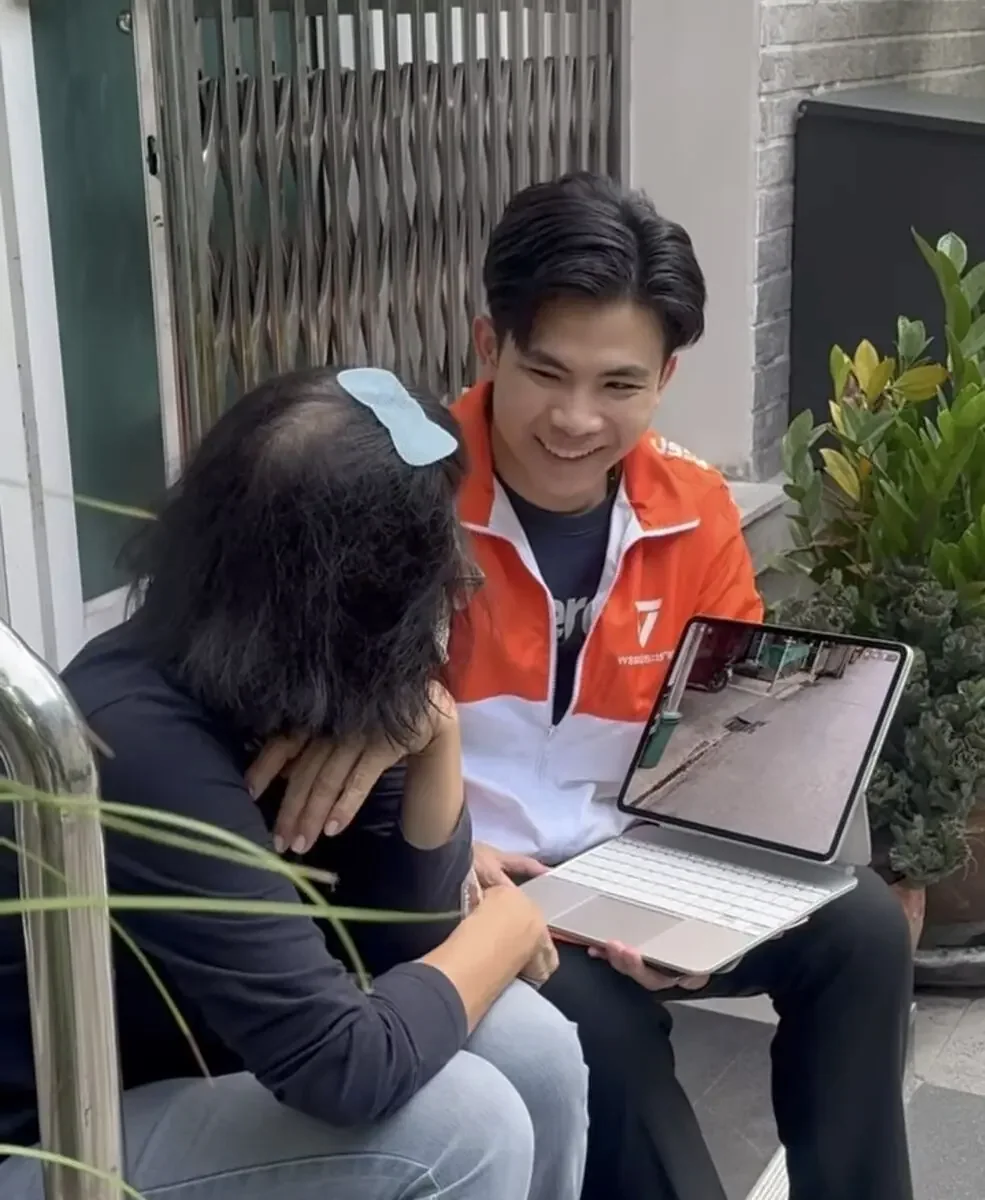
Listening to the neighbourhood
A district that works for the people already here
How can Samphanthawong support livelihoods, usable public space and established communities together? I brought this question into the campaign through conversations with residents and traders.
The proposals addressed connected concerns: space to trade, communities under pressure from development, and disruption caused by public works. These proposals focused on how people experience the district day to day.
Making local trade easier
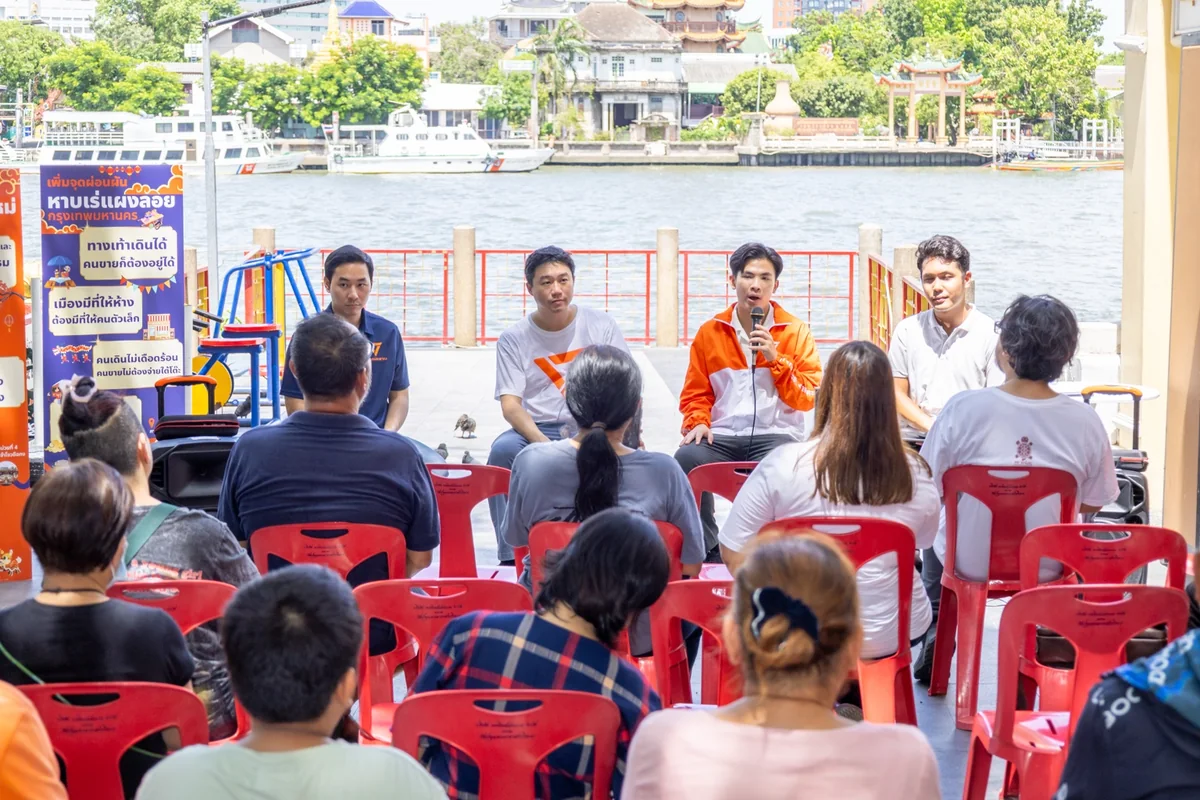
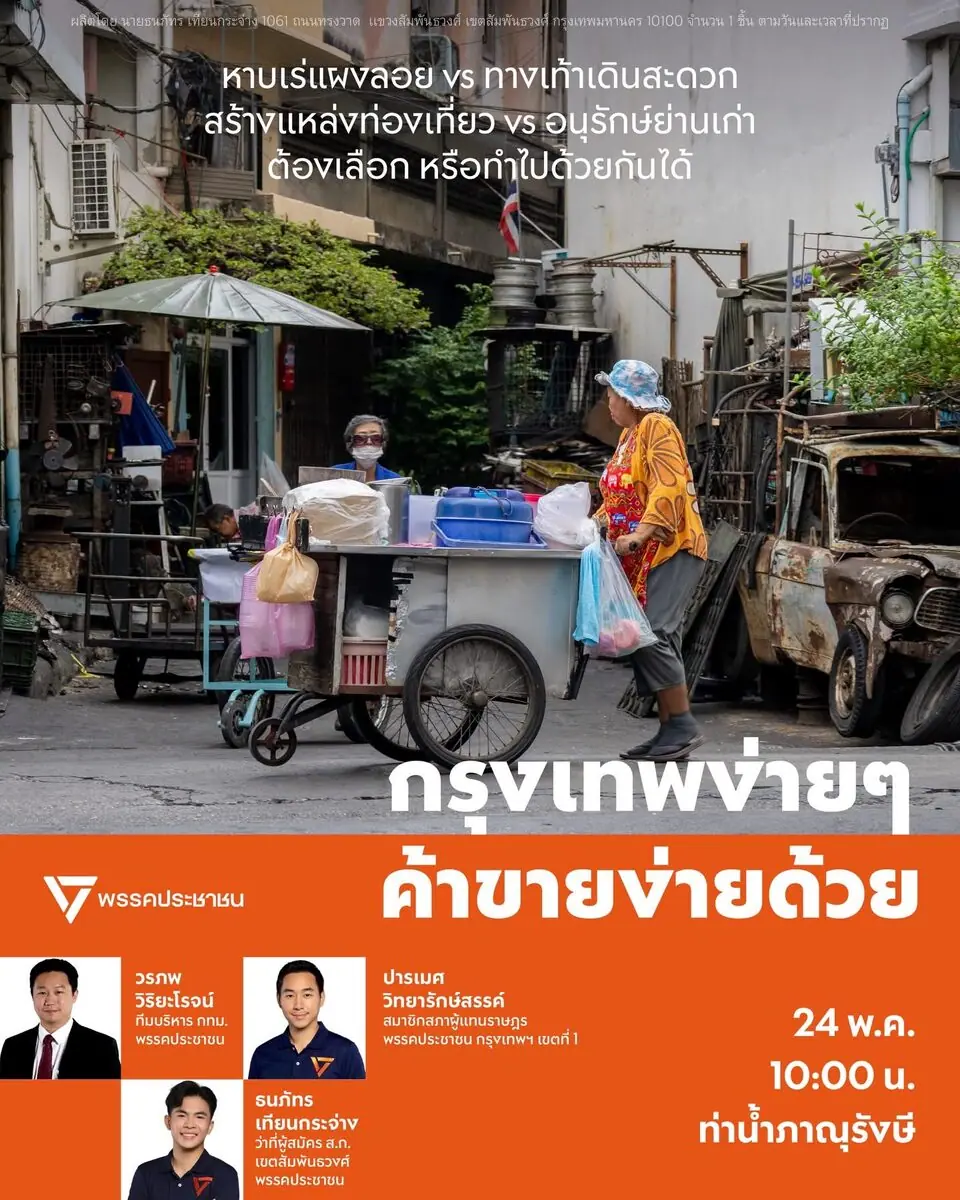
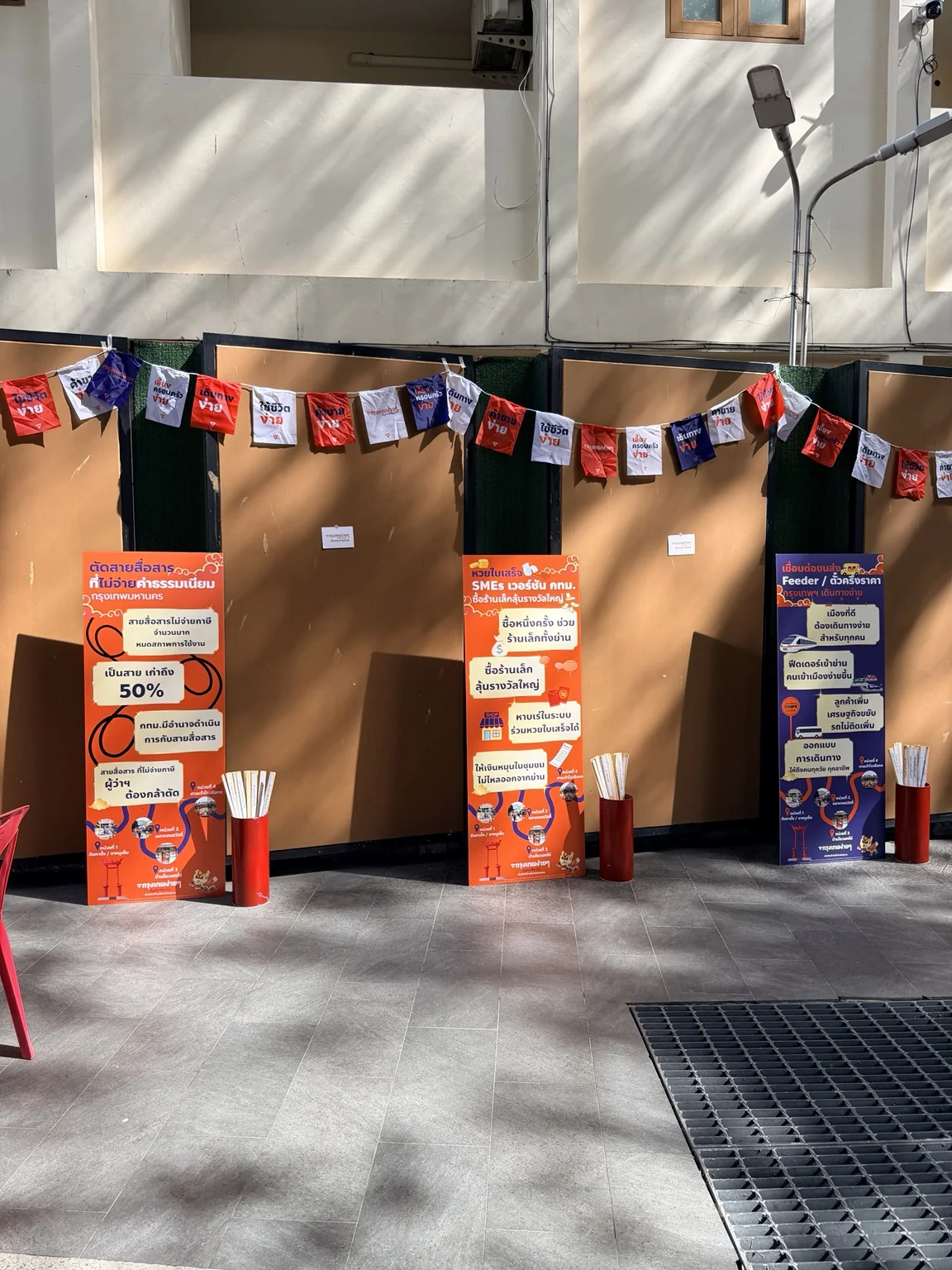
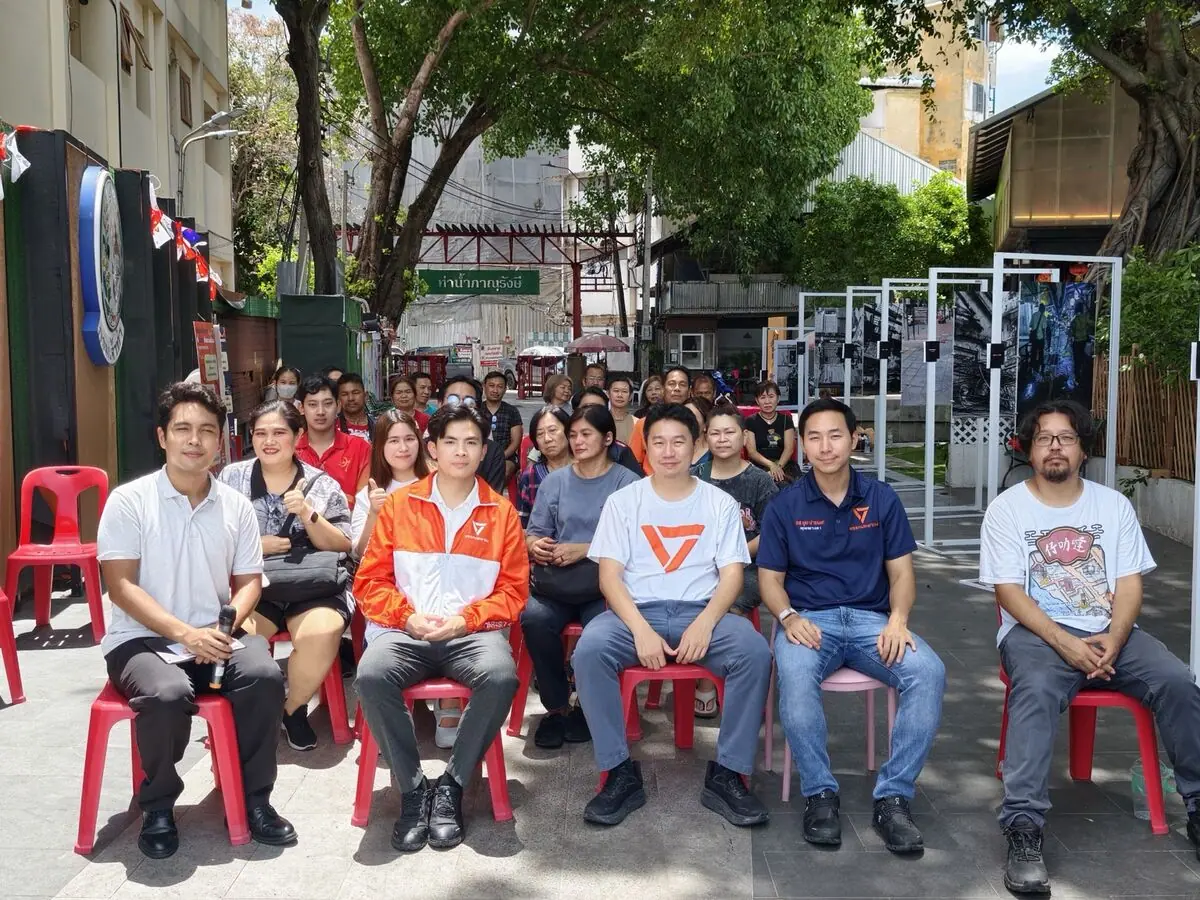
I helped organise “Bangkok Made Easy: Easier Trading” at Phanurangsi Pier, Talat Noi, on 24 May 2026. The forum brought local trade into the policy conversation, alongside the people and character that make each neighbourhood distinctive.
The idea was to make it easier to earn a living while preserving local identity: support small traders, keep public space usable, and make room for the businesses and communities already rooted there.
Trading space that works
I argued for trading rules that small vendors could realistically enter and comply with. The party’s collective proposal favoured arrangements tailored to each area over blanket removal or unrestricted vending, balancing access, enforcement and shared pavements.
This continued concerns raised in MP Paramait and the District 1 team’s Maha Chak trader discussions, which I reflected in a post on 10 March 2025. The forum brought those concerns into further discussion; it did not originate the whole platform or settle every implementation detail.
Local identity and everyday livelihoods
Keeping communities in place
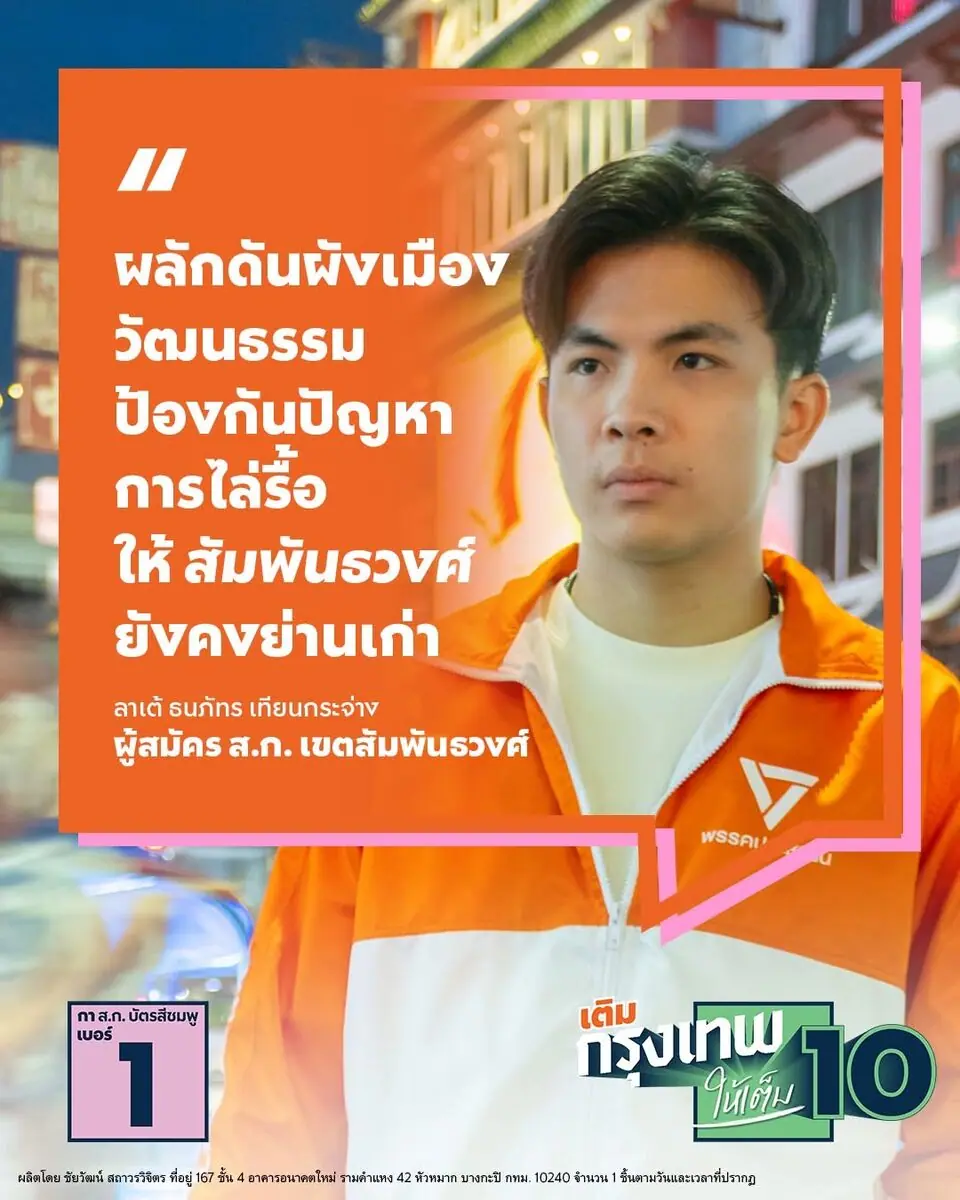
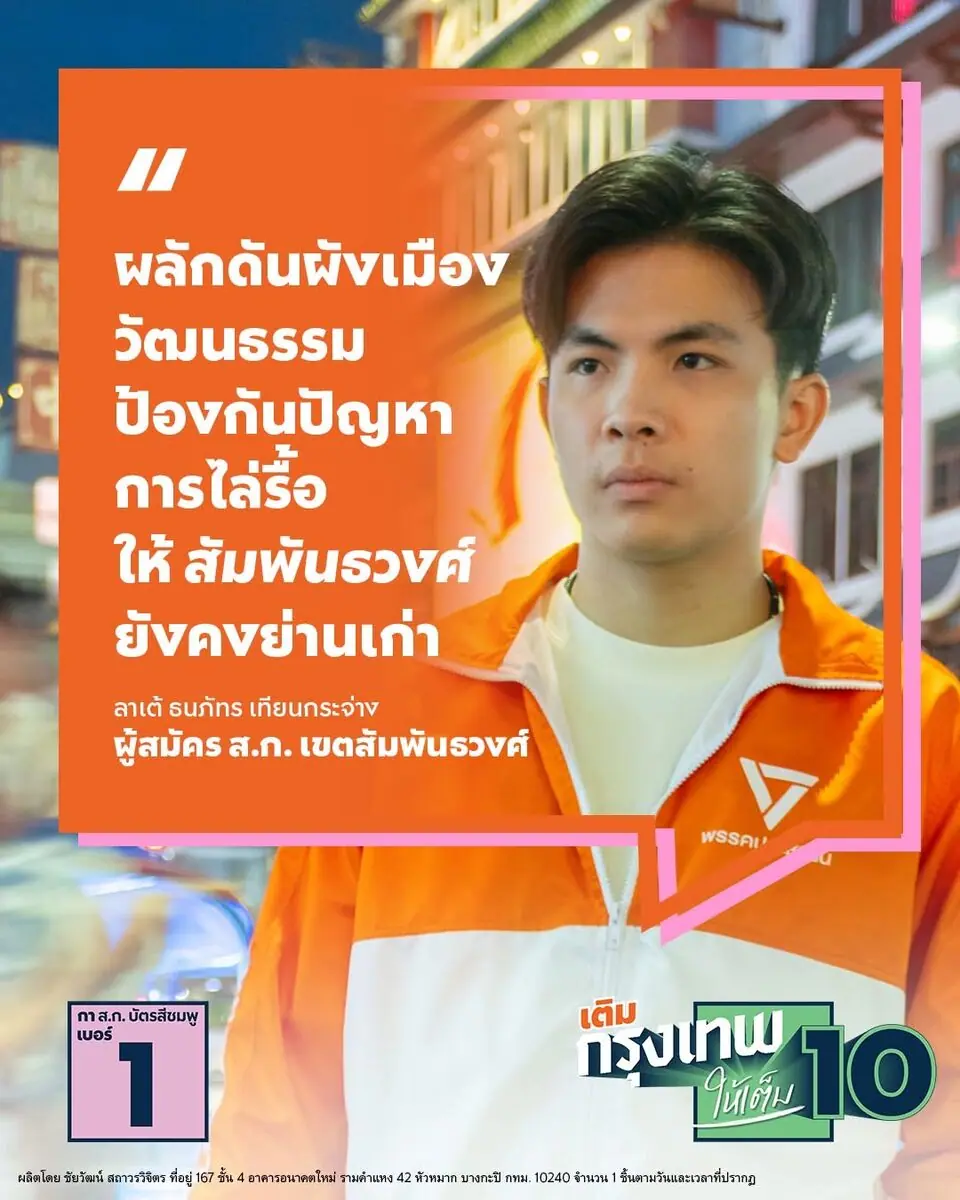
Making trade easier also means asking who gets to remain as the district changes. I presented cultural planning as a way to protect historic buildings and long-time communities.
In the clip published on 31 May 2026, I connected concerns from the Talat Noi discussion with development and tourism that account for existing residents, ways of life and businesses. The artwork was produced with the campaign team; these were proposals, not approved statutory plans.
Campaign policies
Swipe, drag or use the Left and Right arrow keys to browse all eight proposals. Motion pauses while you hover or focus. Press Space on the gallery to pause or resume.
Original policy posts
- Trading-space rules for Sampeng
- Transparent trading rules beyond patronage
- District investment that spreads tourism income
- Managing traffic noise and long-stay parking
- Fire safety for narrow lanes and historic communities
- Scheduling roadworks around peak trading seasons
- Clear and fair rules for street vending
- Urban development without displacing long-time residents
Giving local concerns a public voice
Alongside developing the proposals, I worked on how to communicate them in public. I conceived a communication campaign that became part of the party’s central communications, alongside the Samphanthawong platform.
That work moved between published films and a presence on the street. Production credits belong to the collaborators and teams identified on each output.
Everyday concerns in Yaowarat
In “Life in Yaowarat is exhausting” (the translated title), I read comments about problems in Samphanthawong to bring residents’ concerns into public discussion.
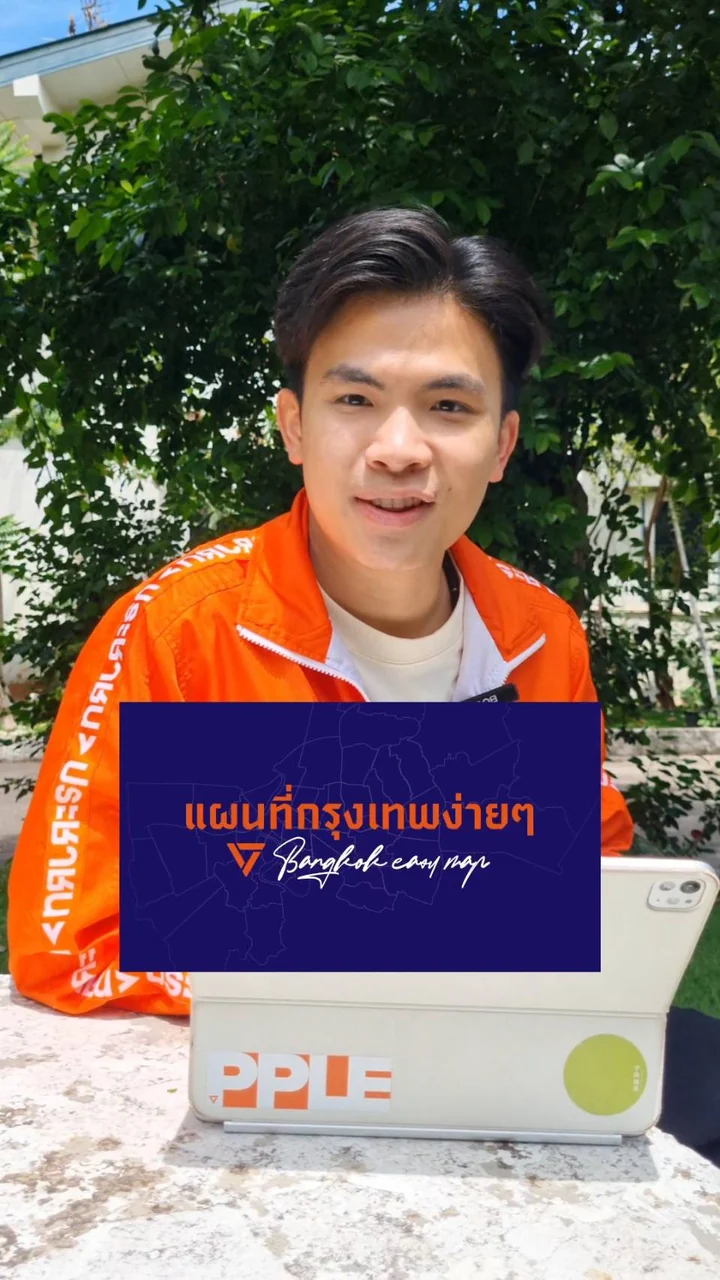
I developed the platform with the campaign team; People’s Party published the electronic campaign material.
A campaign that fits the neighbourhood
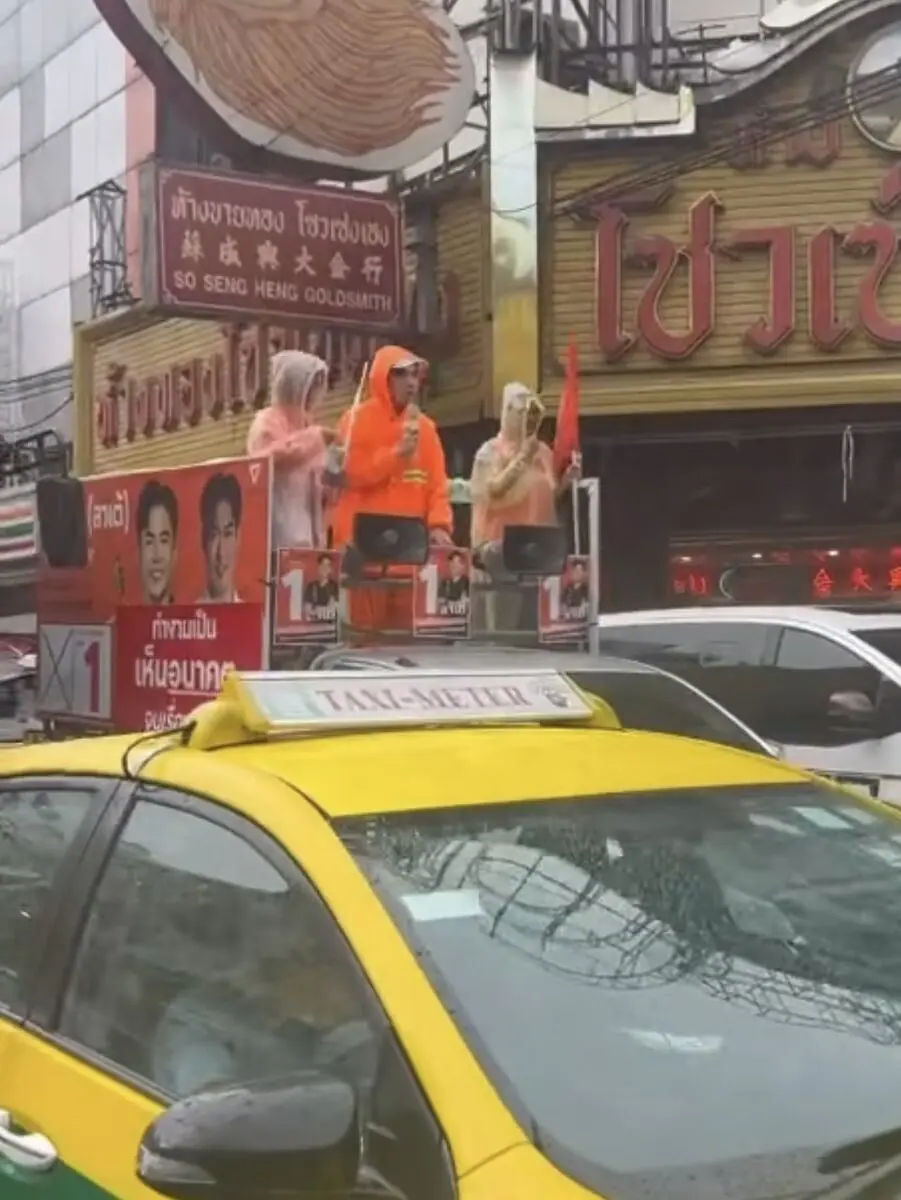
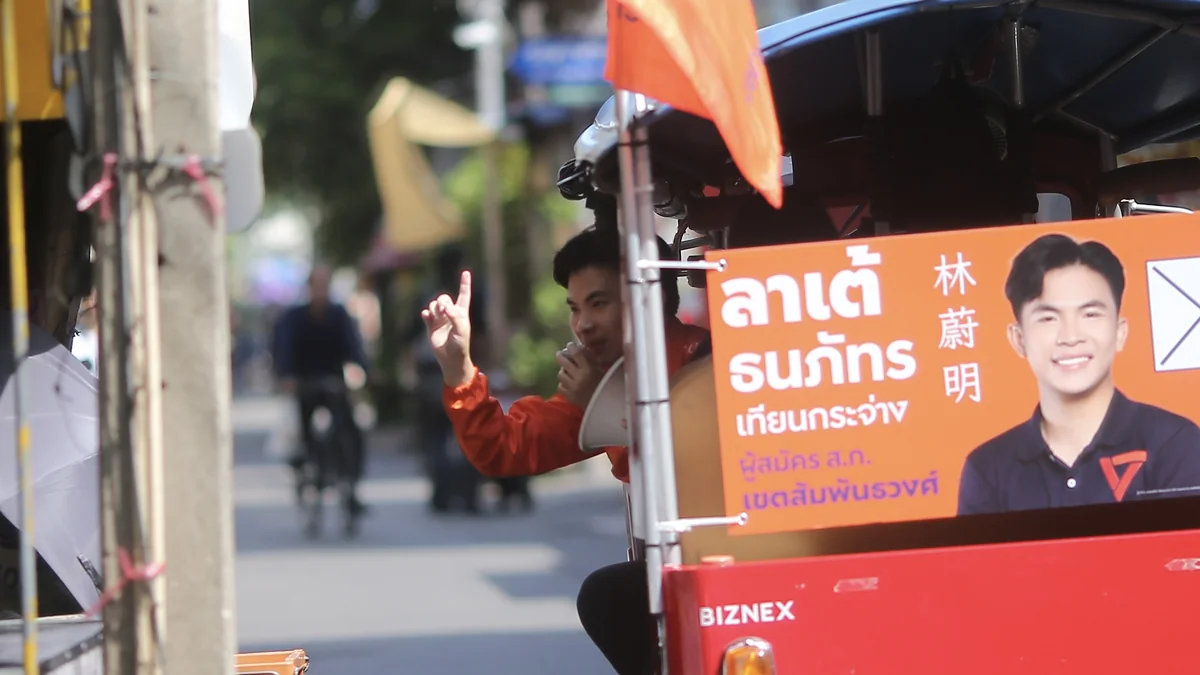
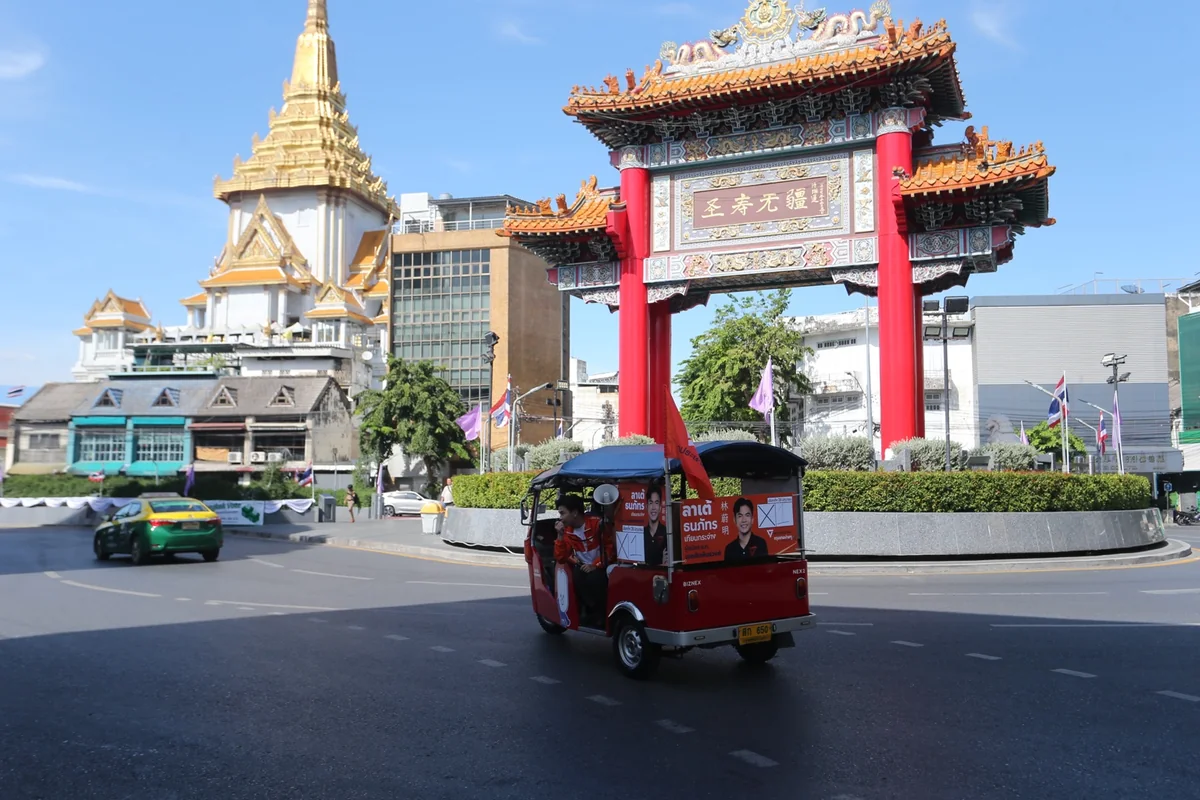
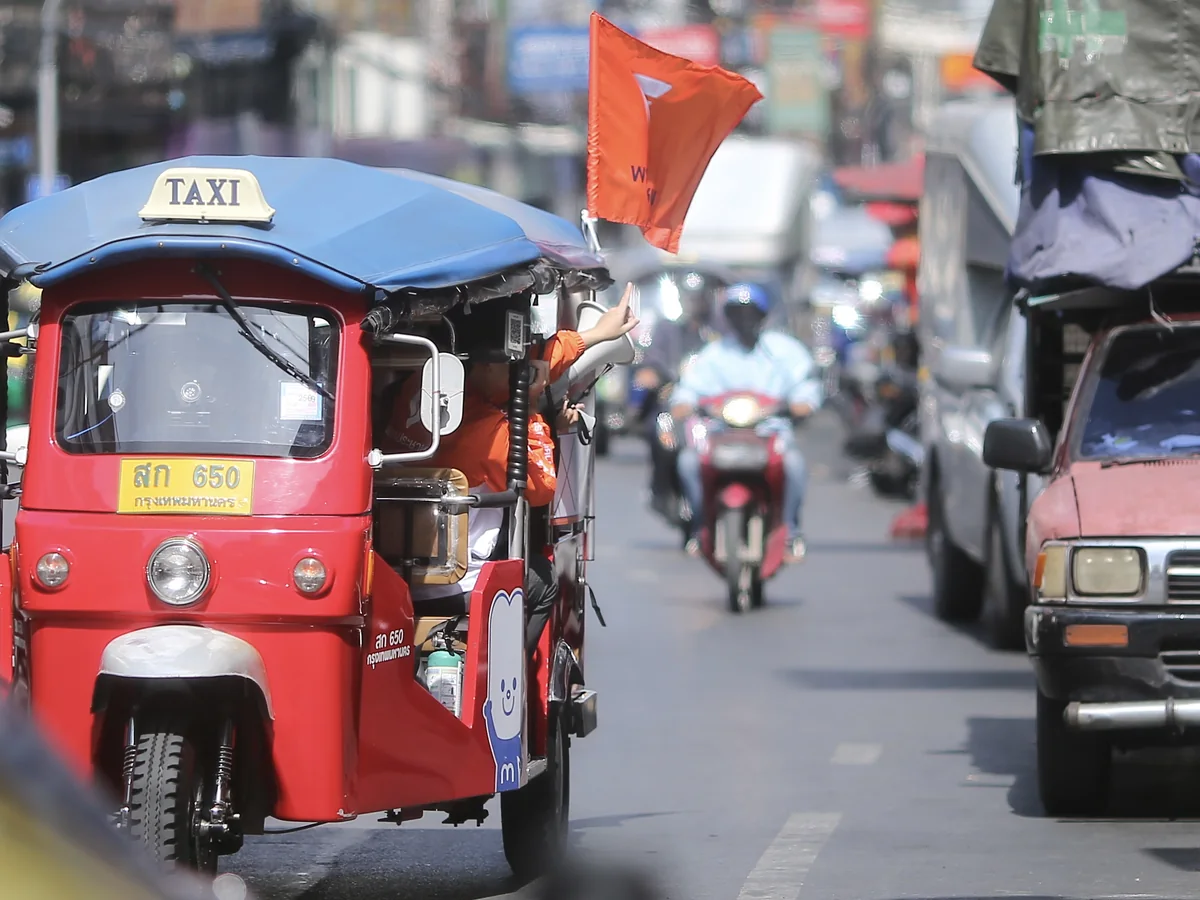
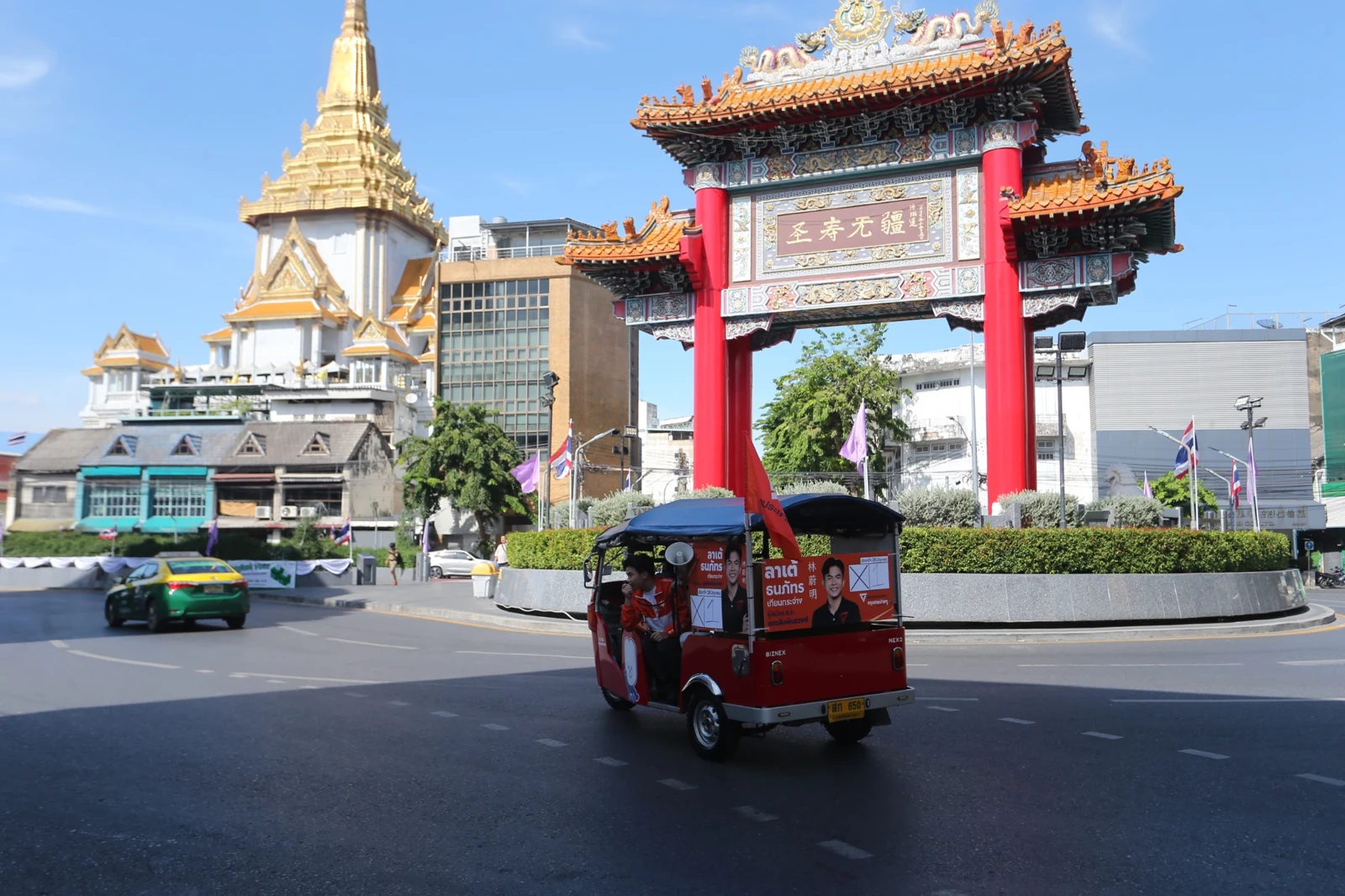
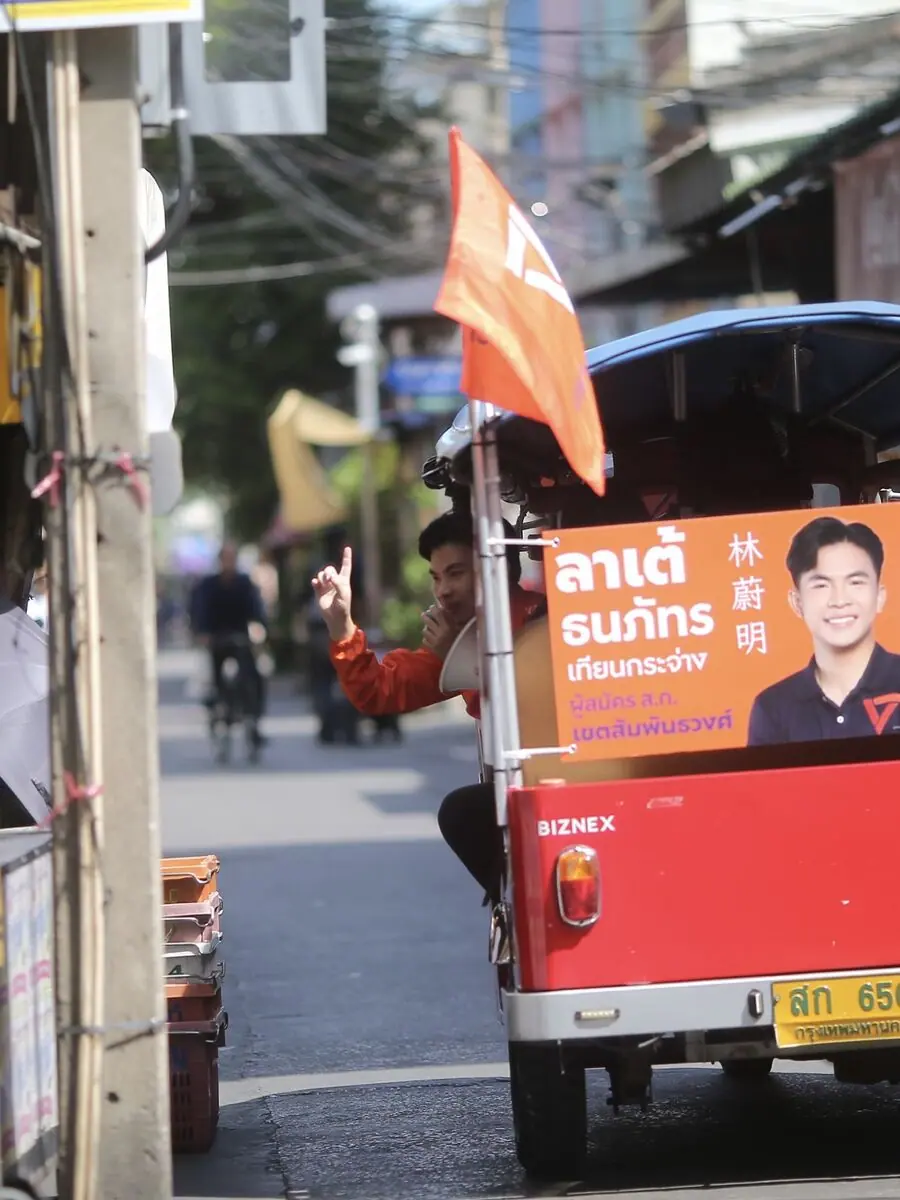
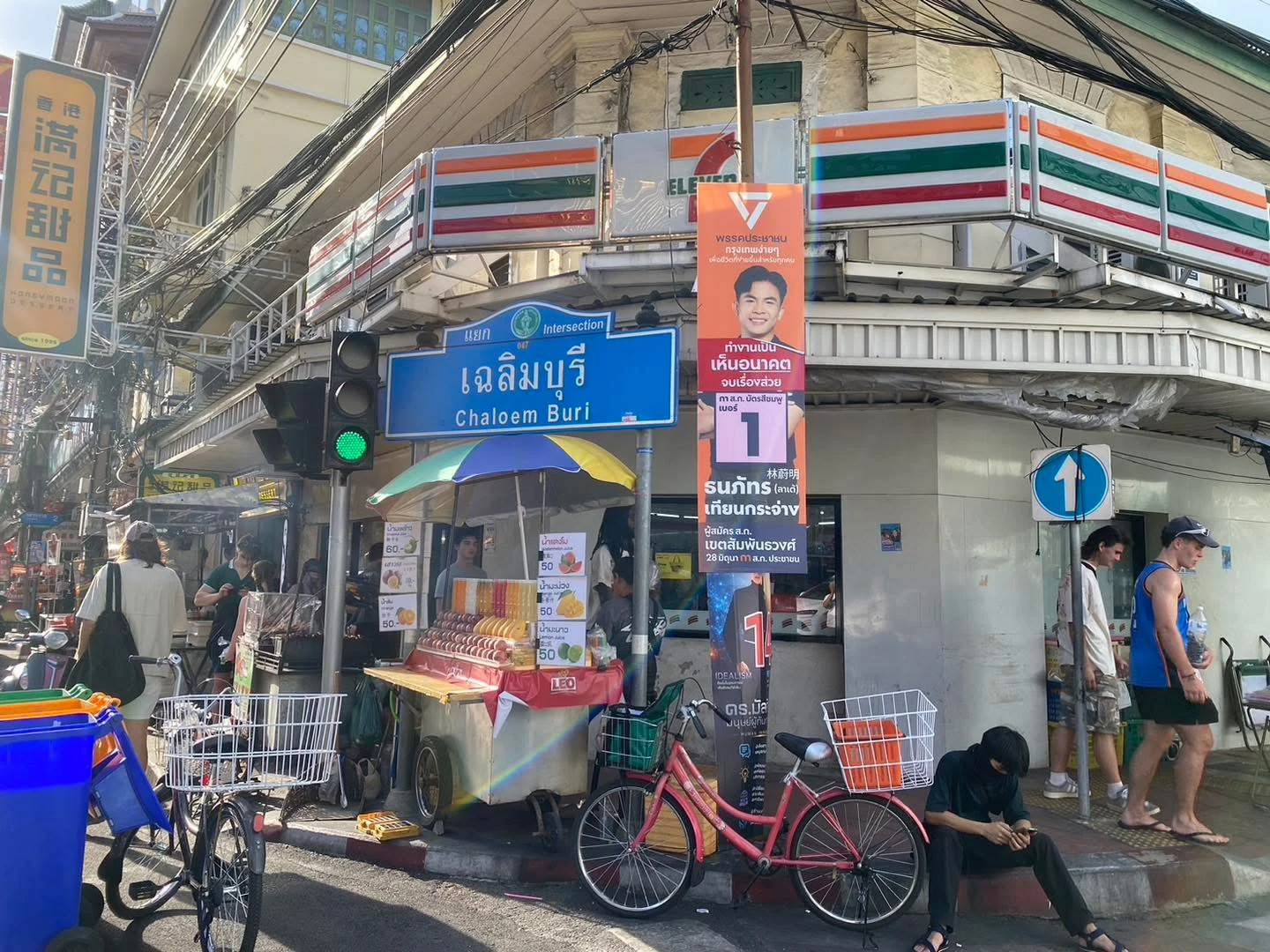
The same attention to everyday life shaped our presence on the street. For the Samphanthawong campaign, we used a MuvMi vehicle to take the sound-truck idea into smaller streets and alleys. Its size helped us reach routes that were harder to navigate with a large campaign truck.
That choice gave the campaign a different presence on the street: a smaller vehicle, closer to the shops, homes and everyday life of the neighbourhood.
The closing
campaign
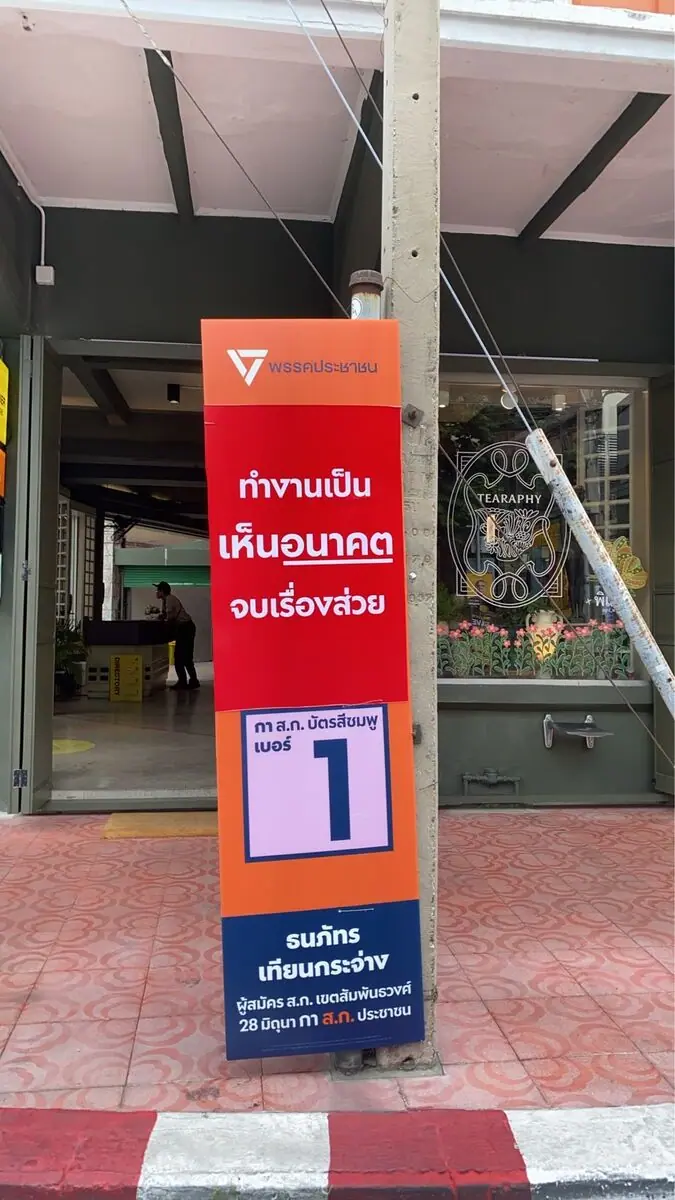
“Know how to get things done.
See the future. End kickbacks.”
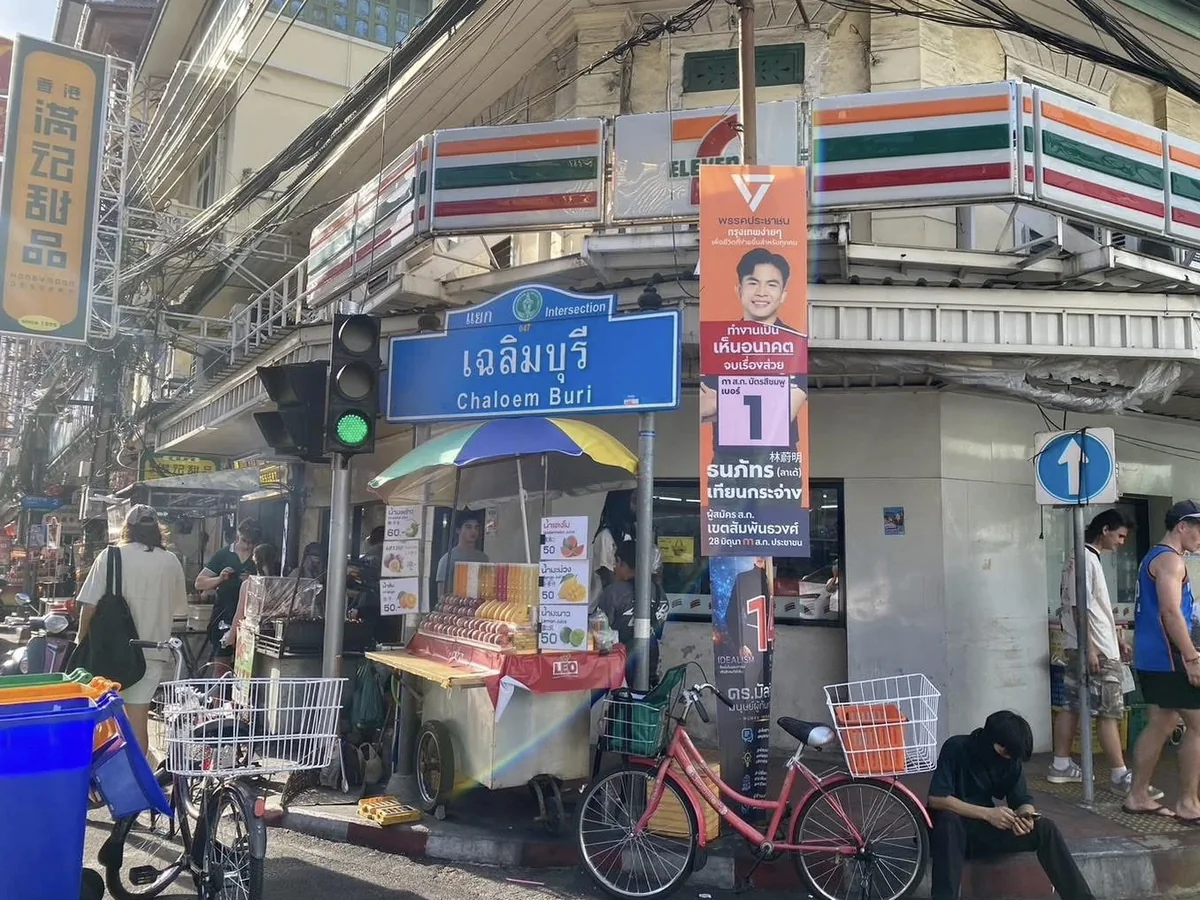
The closing message connected parliamentary experience, the trading district’s future and a position on informal payments. Reporting on 26 June 2026 recorded its use on Facebook and as stickers on existing signs.

From local problems to the final message
The idea began with the problems residents and traders raised in Samphanthawong. I considered those conversations alongside my reading of polling and research from several organisations, asking what people expected from a Bangkok councillor.
I read this as a different expectation from a parliamentary election: people wanted a representative who could get practical work done close to home. That shaped the emphasis on competence in “Know how to get things done”, alongside a vision for the district and a response to informal payments.
Election result
I was not elected. The district office recorded 2,246 votes, second of 3 candidates: 31.02% of 7,240 valid votes.
The percentage is calculated from the report’s totals. The work documented here remains a campaign record, with no claim of adopted rules, budget savings or implemented policy.
Swipe, drag or use the Left and Right arrow keys to browse. Motion continues while scrolling the page and pauses for keyboard focus. Press Space on the gallery to pause or resume.